



Right on our doorstep lie many small islands, perfect for diving. 🙂
Here's how a typical day trip by boat with us works:
At 9:00 AM, the day trip boat departs from the pier in Punat to the nearby islands of Plavnik, Kormati, Cres, Prvic, and Grgur. The dive sites we visit mostly feature steep walls, shallows, caves, grottos, and overhangs, all covered in Mediterranean flora. Once we arrive at the anchorage, we'll have a detailed briefing.
Afterward, we'll get ready for our first dive and enjoy Croatia's underwater world with its beautiful and colorful marine life. Back on board, we'll have a lunch break before heading to the second dive site to enjoy our favorite sport again.
Around 3:30 PM, we'll return to the port of Punat and enjoy some relaxing après-dive time!
For trips to Prvic and Grgur, we usually arrive back in Punat around 4:30 PM.
For diving on Krk you will need:
For your safety, all our boats are equipped with an oxygen system.
Learn more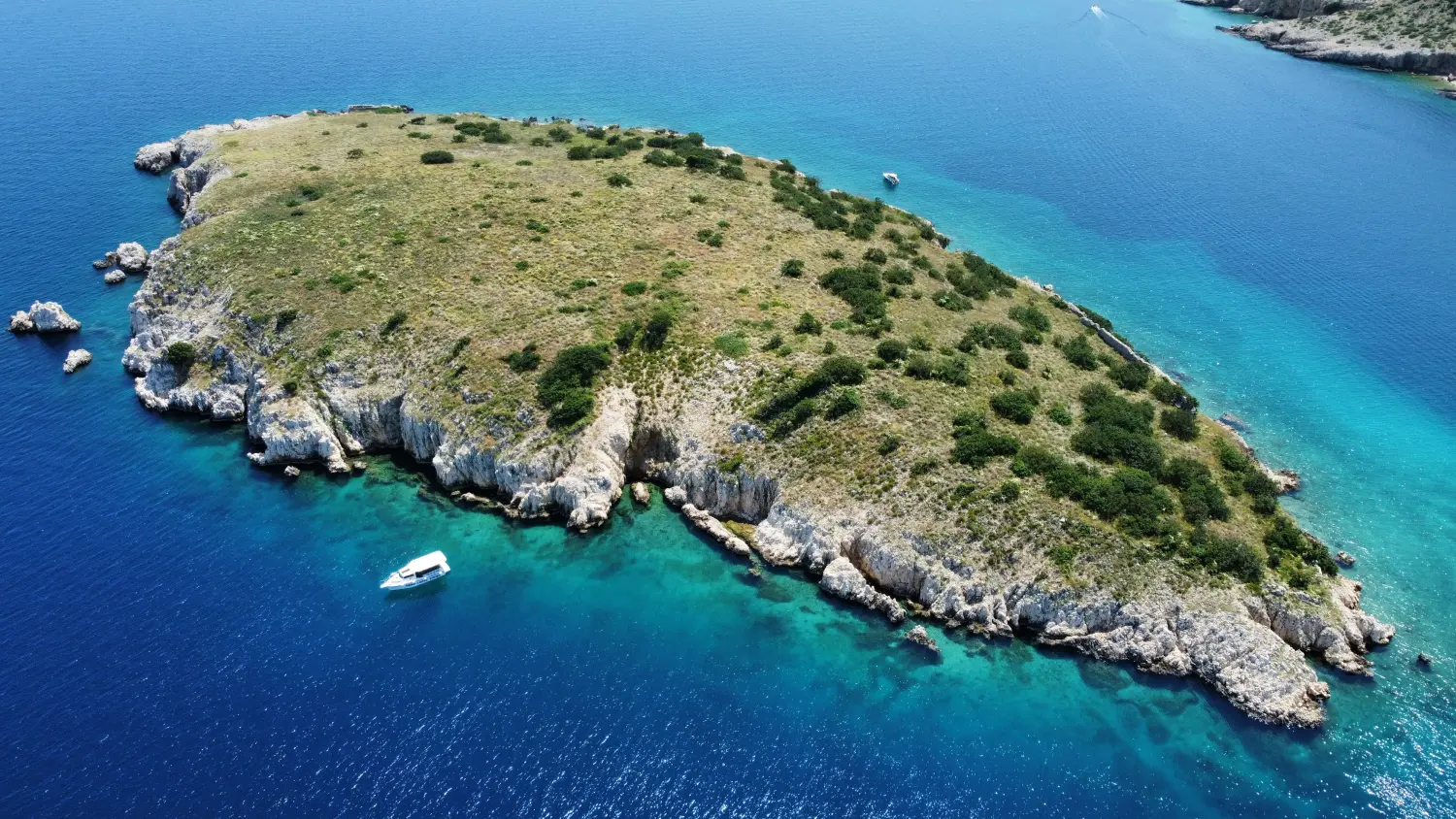
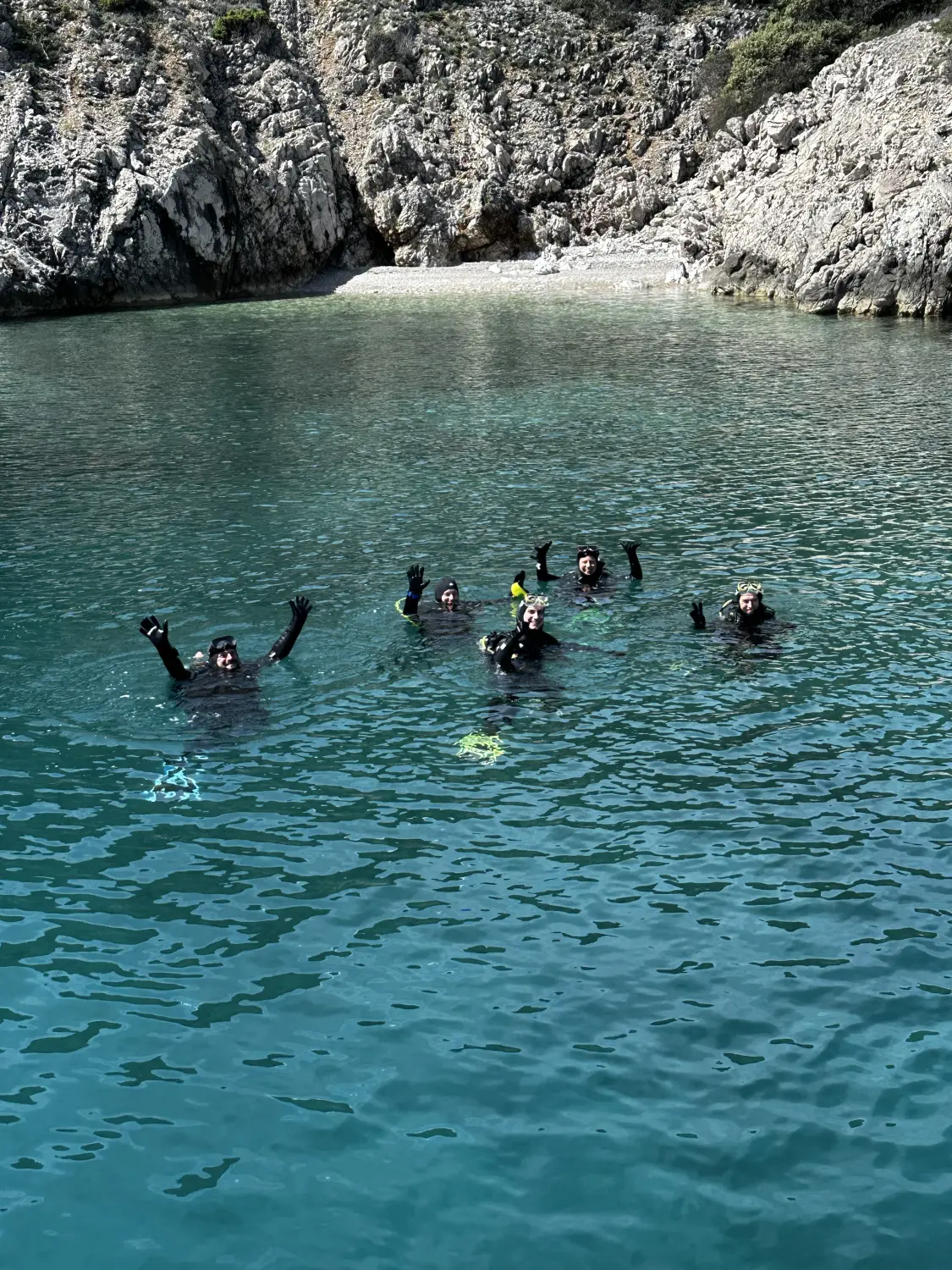
Want to try scuba diving with us? No problem! 🙂
During a try dive, you'll be gently introduced to the sport, can enjoy the tranquil moments, and focus entirely on the marine life underwater.
Before we begin, we'll give you a little theory. Then we'll dive down together and be enchanted by the flora and fauna of the Mediterranean.
If you've caught the diving bug as much as we have, we look forward to embarking on this exciting journey with you and accompanying you on your diving course!
Shore dives from Punat:
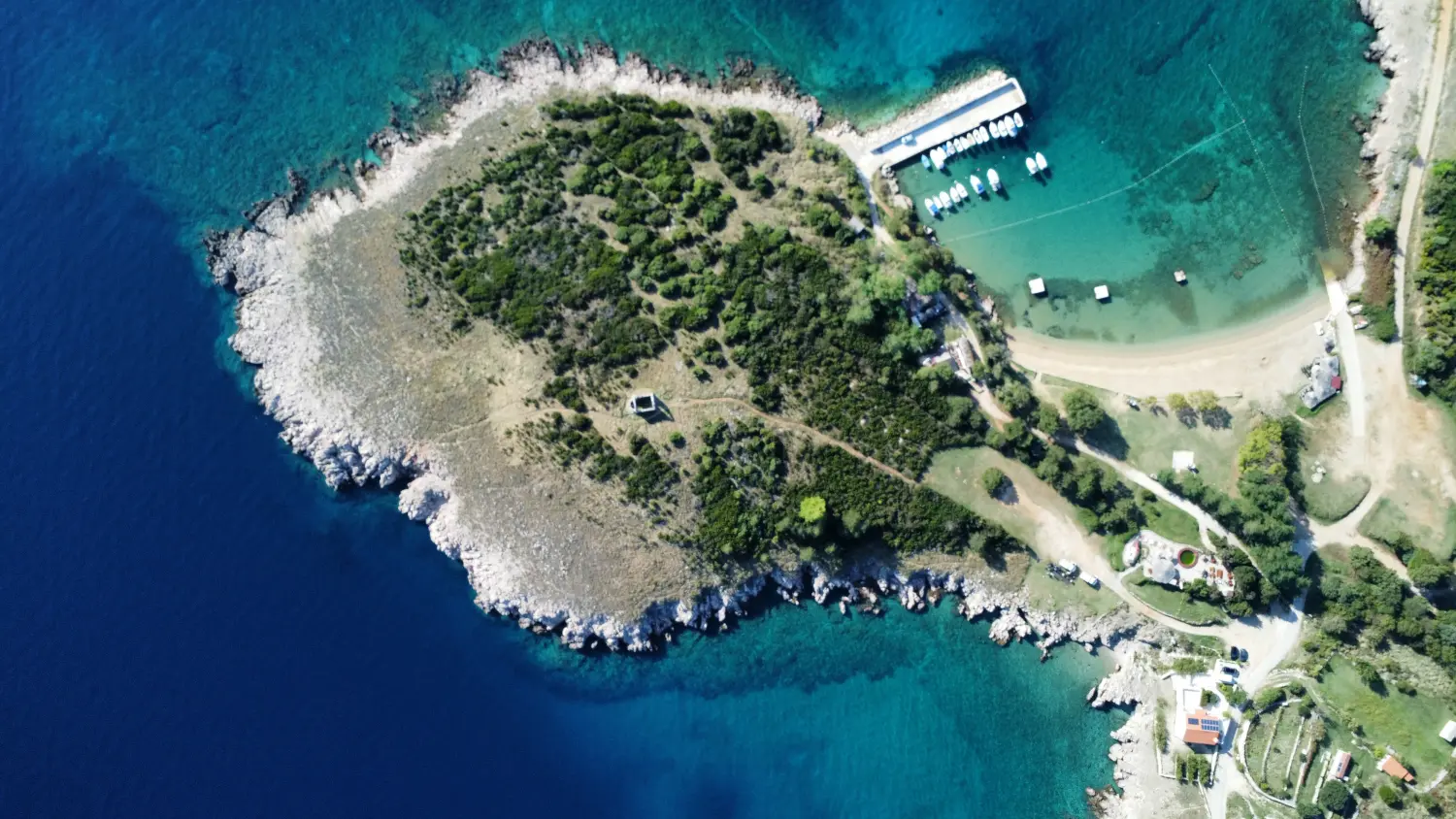
While our shore dive sites aren't numerous, they are certainly attractive. They are ideal for getting back into diving after a long break, night dives, introductory dives, or dive courses – the sites have something to offer everyone…
Since our shore dive sites are located on both sides of the island, we can always find an alternative or suitable shore dive site even in poor wind and weather conditions.
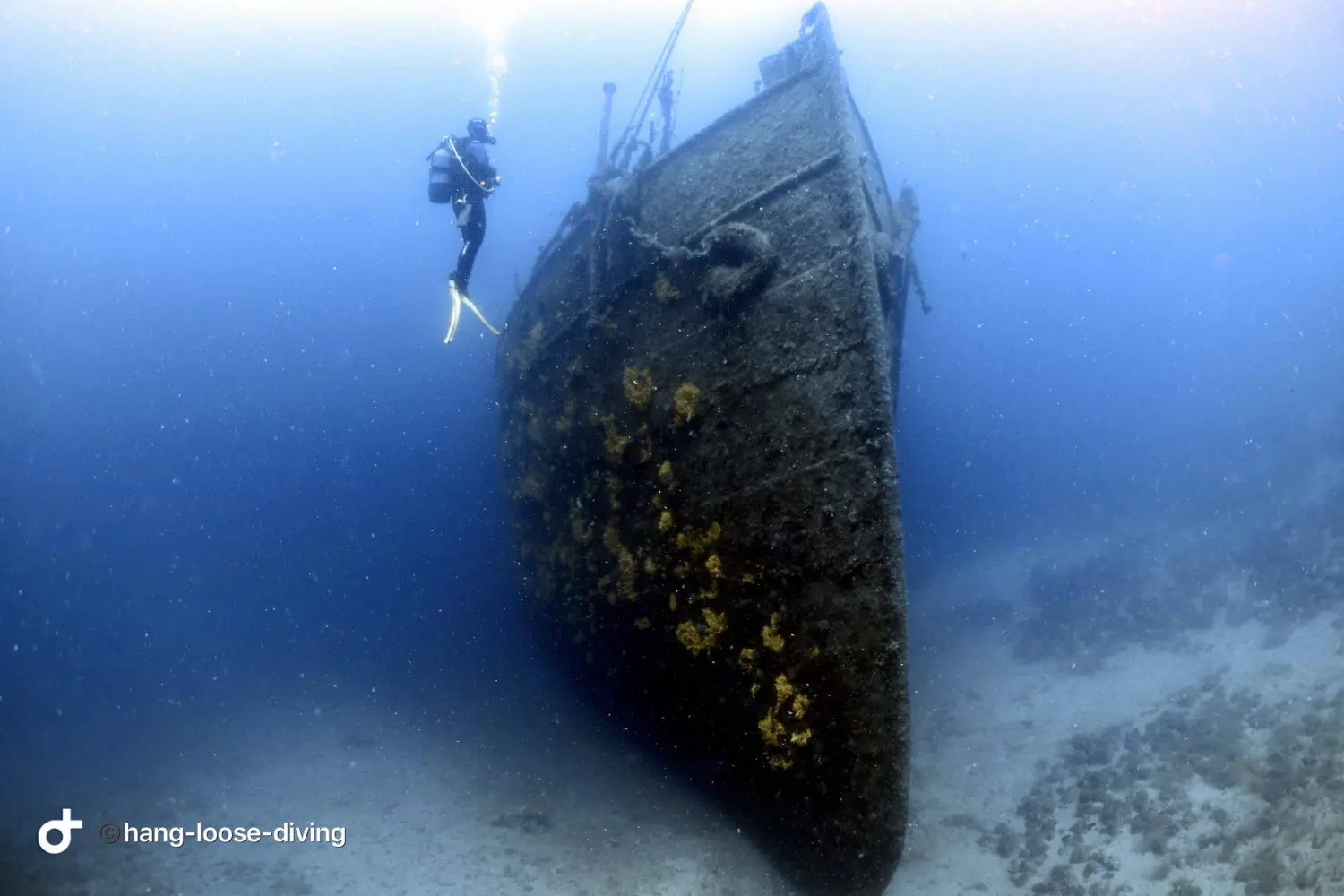
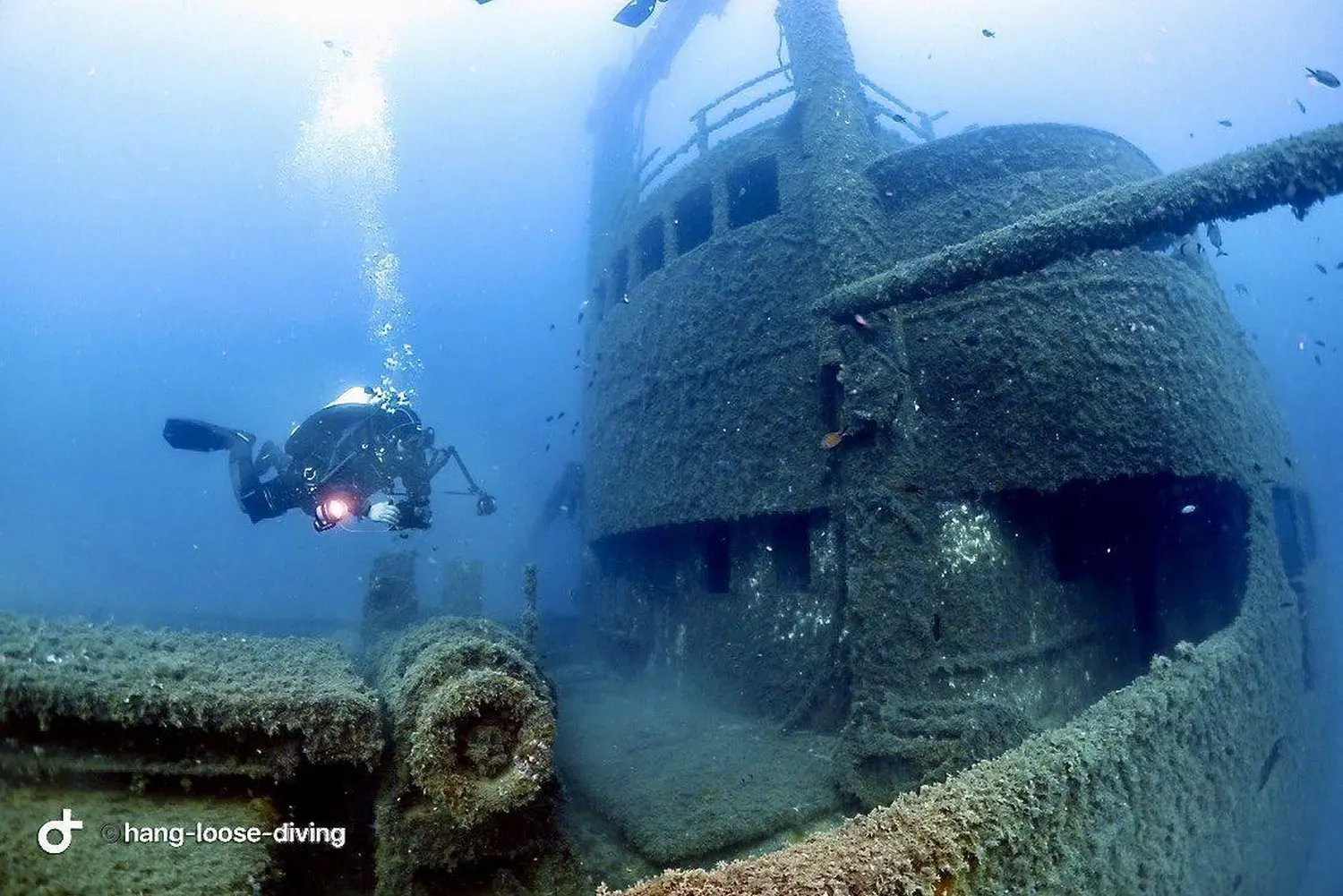
Diving at the wreck of the “Peltastis”
Our “house wreck”, the Peltastis , sank in January 1968 during a severe winter storm north of the town of Silo.
It lies at a depth of between 7 and 32 meters. The cargo holds are clear, easily accessible for diving, and lie at a depth of approximately 23–27 meters. The bow begins at a depth of 18 meters. Buoys with ropes are attached to the superstructure at the stern and on the mainmast to facilitate descent. The wheelhouse is also accessible for diving.
The sea has now firmly reclaimed the artificial reef. It boasts a rich flora and fauna, where you might even spot a larger conger eel. Night dives on the wreck, in particular, make the dive a highlight.
Diving at the wreck of the “Lina”
The Lina was built in England in 1879. She primarily transported wine and oil to Northern Europe. On the return voyage to Italy, she mostly carried coal. In January 1914, the ship ran aground on the Croatian coast in heavy fog, not far from Cape Pecen on the island of Cres. The ship, laden with mahogany timber, sank very quickly. It is unknown whether there were any casualties.
Today, the Lina lies almost upright at a depth of 27-52 meters on the sandy slope, its bow pointing towards the island of Cres. A descent line, attached to the bow, leads to the remains of the steel steamer. You can also dive the hull. The few remaining superstructures provide shelter for small schools of fish and crustaceans.
Diving at the wreck of the “Jakljan”:
The cargo steamer was built in Trieste in 1924 under the name “Jakljan,” measuring 41.1 meters in length and 7.9 meters in width. After being seized by the Italians in 1942 for the war effort and renamed “Adria,” the ship served as a transport vessel. After the Italian surrender in 1943, the ship was taken over by the Wehrmacht. The five-man Croatian crew was reinforced by soldiers who operated the two Italian Breda 20mm anti-aircraft guns.
On April 25, 1944, the crew received orders to transport troops and supplies from Senj to Rijeka. Despite the captain's protests due to a strong Bora wind, the ship set sail and sank the same day. None of the sailors or soldiers on board survived. Today, the ship lies upright at a depth of 42–50 meters, approximately 100 meters off the eastern side of the island of Krk. Diving the wreck is only permitted for well-trained divers with Advanced Nitrox certification or higher, as the dive inevitably requires decompression. The descent is made in open water along the descent line, which is attached to the stern of the ship.
During the free fall, the outlines of the wreck appear at a depth of approximately 25-30 meters. The two guns at the bow and stern are the most interesting features. Over the years, nothing remains of the cargo. Even the Wehrmacht equipment, such as helmets and other gear, has already fallen victim to looters.